

Getting ChatGPT to mention your brand isn't about gaming a system. It's about becoming the kind of source that a sophisticated language model considers worth recommending. ChatGPT SEO is a different discipline from traditional search optimization, and the brands figuring it out now are building an advantage that compounds over time.
Here's the reality: ChatGPT doesn't maintain a ranked list of websites. It generates responses by synthesizing information from its training data and, increasingly, from real-time web access. When a user asks "what's the best CRM for freelancers?" and ChatGPT includes your product in the answer, that happened because your brand accumulated enough authority signals, quality content, and online presence to be part of what the model considers relevant and trustworthy.
This guide breaks down the specific steps that move your brand from invisible to recommended. No tricks, no hacks. Just a systematic approach to earning the kind of visibility that AI assistants reward.
How ChatGPT Decides Which Brands to Mention
Understanding the mechanics helps you optimize more effectively. ChatGPT's brand selection process works differently than Google's ranking algorithm, though there's some overlap.
ChatGPT draws from multiple signals when deciding which brands to include in a response. The most important factor is the breadth and quality of information available about your brand across the web. If authoritative third-party sources consistently mention your brand in the context of a specific category, ChatGPT is more likely to include you when users ask about that category. This is closer to reputation than to keywords.
Training data plays a significant role. ChatGPT's base knowledge includes information from its training corpus, which means brands that had a strong web presence at the time of training have an inherent advantage. But with browsing capabilities and more frequent model updates, the importance of your current online presence is growing. What you publish and what others say about you today increasingly shapes your AI visibility tomorrow.
Factual accuracy matters more than you might expect. ChatGPT is calibrated to avoid confidently recommending brands it can't verify claims about. If your website says you're "the #1 rated platform" but no independent source supports that claim, the model is less likely to repeat it. Brands with verifiable, well-documented strengths get cited more consistently.
Query specificity also influences which brands surface. Generic queries ("best software") tend to produce mentions of the largest, most well-known players. Specific queries ("best AI writing tool for e-commerce product descriptions under $50/month") create opportunities for smaller, specialized brands to appear. Your ChatGPT SEO strategy should account for which types of queries represent your best opportunities.
Step 1: Create Citation-Worthy Content
The single most effective thing you can do for ChatGPT SEO is publish content that an AI system would want to cite. This means content that's genuinely useful, factually accurate, and structured for easy extraction.
Start with the questions your target audience asks. Not just the questions you wish they'd ask or the ones that align neatly with your product features. The real questions. Check forums, social media, customer support tickets, and community discussions to understand what people actually want to know. Then create content that answers those questions better than any existing resource.
Depth beats breadth for citation-worthiness. A single comprehensive guide that thoroughly covers a topic generates more AI citations than ten shallow blog posts touching on related themes. ChatGPT prefers to cite sources that provide complete answers because it reduces the need to synthesize information from multiple places.
Include specific data, examples, and evidence in your content. Vague statements like "many businesses benefit from our solution" carry no citation value. Specific statements like "a 2025 study of 500 SaaS companies found that brands appearing in AI recommendations saw 23% higher organic traffic growth" give ChatGPT something concrete to reference. Original research, case studies with real numbers, and proprietary data are especially valuable because they can't be found elsewhere.
Write clear, definitive statements that can stand alone when extracted. ChatGPT often pulls individual sentences or short passages from source content. If your key points are buried in long paragraphs surrounded by qualifiers and tangential information, they're harder for the model to extract and cite. Lead paragraphs with your main point. Be direct.
Step 2: Optimize Your Content Structure for AI
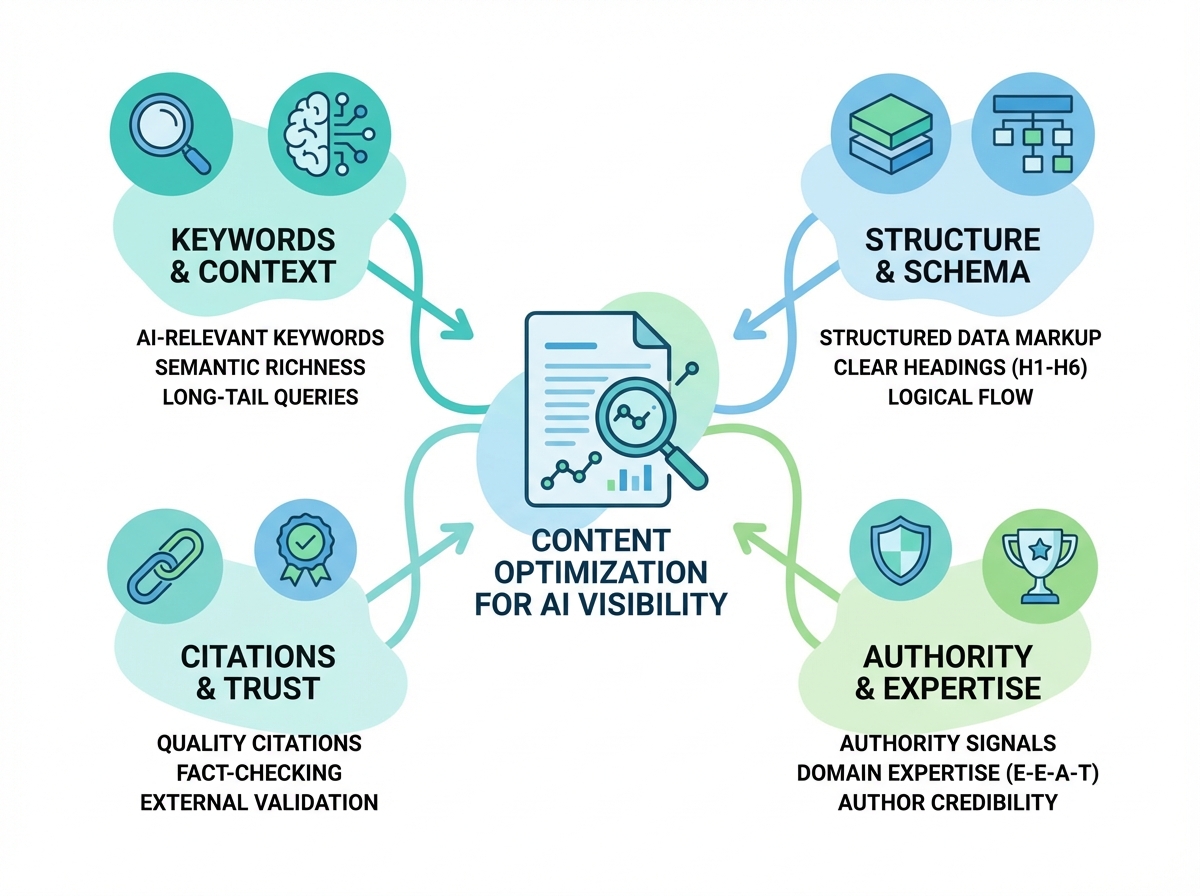
Structure isn't just about human readability. It directly affects how well AI systems can parse, understand, and cite your content. Good structure serves both audiences.
Use descriptive headings that function as questions or clear topic statements. "How to Choose a Project Management Tool" works better for ChatGPT SEO than "Making the Right Choice." The descriptive version matches the way users phrase queries to ChatGPT, creating a direct connection between the question asked and the answer your content provides.
Implement a logical heading hierarchy. H2 tags for major sections, H3 tags for subsections within those sections. Don't skip levels or create inconsistent structures. This hierarchy helps ChatGPT understand the relationship between different pieces of information in your content and locate the most relevant section for a given query.
Include summary statements at the beginning of major sections. These serve as potential extraction points for AI citations. If someone asks ChatGPT a question that maps to one of your sections, a clear opening summary gives the model a ready-made answer to cite. The detailed content that follows provides supporting evidence and depth.
Use lists and structured formats for procedural or comparative content. When you're explaining steps, comparing features, or listing recommendations, use numbered lists or tables rather than embedding everything in paragraph form. These formats are easier for AI systems to parse and present in their responses.
Add FAQ sections to important content pieces. Structure these as bold questions followed by concise, complete answers. Each Q&A pair becomes an independent citation opportunity. Think about the specific follow-up questions a user might ask after reading the main content, and address them directly.
Step 3: Build Brand Authority Signals
ChatGPT's assessment of your brand isn't based solely on your own content. It's shaped by your entire online footprint. Building authority signals across multiple channels strengthens your position in AI-generated responses.
Third-party mentions are among the strongest authority signals. When reputable publications, industry blogs, and review sites discuss your brand positively, it creates a pattern that AI systems recognize. Pursue press coverage, contribute guest articles to established publications, and engage with industry analysts who publish about your space. Each quality mention adds to the signal cloud that AI models use when deciding which brands to recommend.
Customer reviews and testimonials on independent platforms carry significant weight. ChatGPT is more likely to recommend a product that has strong ratings on G2, Capterra, Trustpilot, or similar review aggregators than one with no third-party validation. Actively encourage satisfied customers to leave reviews and respond professionally to negative feedback. The volume and quality of your reviews directly influence your AI visibility.
Build a consistent presence across professional communities where your audience participates. If your target customers discuss problems you solve on Reddit, Stack Overflow, industry forums, or LinkedIn, having your brand (or team members representing your brand) actively contributing helpful information creates authority signals. These community contributions show up in training data and web searches that inform AI responses.
Maintain accurate and comprehensive information across business directories, Wikipedia (if your company qualifies for a page), and your own website's About and Team pages. AI assistants cross-reference multiple sources to verify brand information. Inconsistencies or information gaps can reduce confidence in your brand and decrease the likelihood of citation.
Step 4: Track Your AI Visibility with Citation Radar
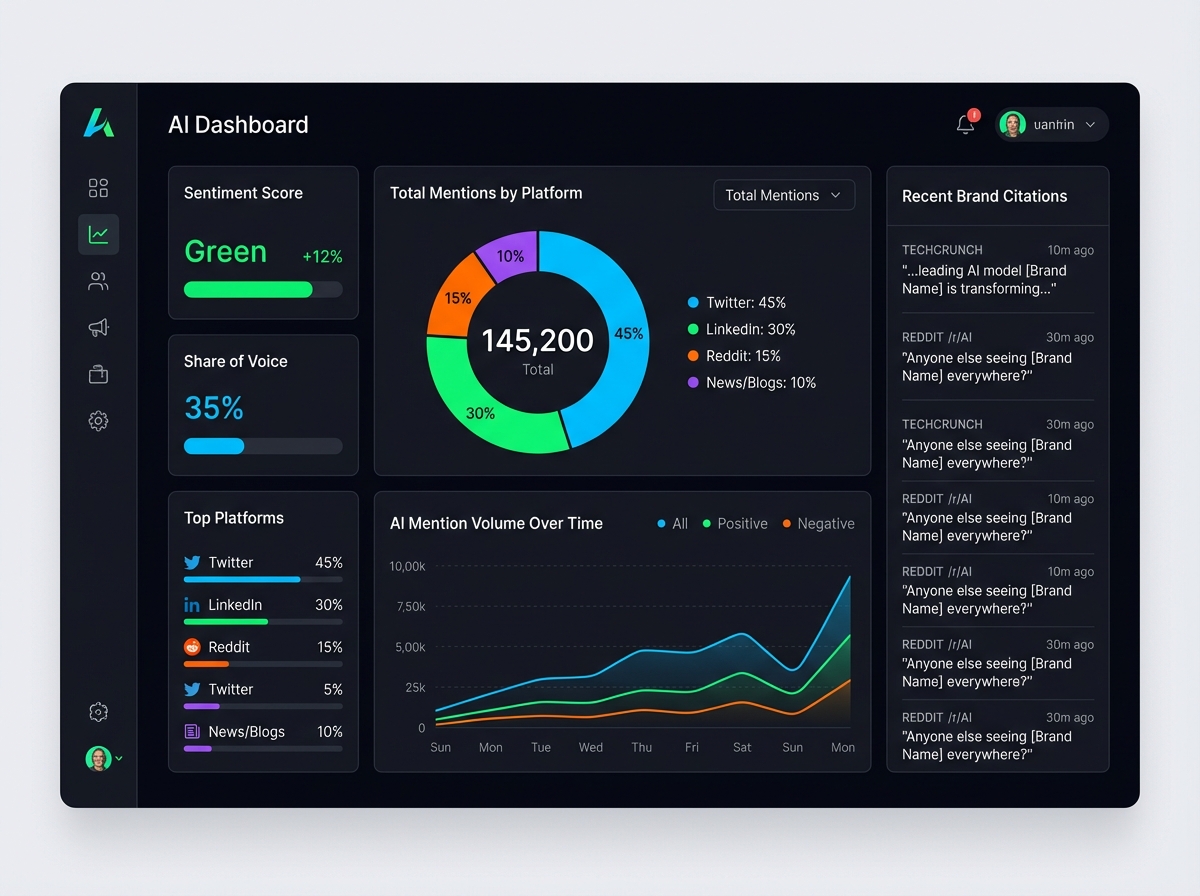
You can't improve what you don't measure. Tracking your ChatGPT mentions and AI visibility across platforms turns optimization from guesswork into a data-driven process.
Gondla's Citation Radar was built for exactly this use case. It monitors how your brand appears across ChatGPT, Gemini, Perplexity, and other AI assistants, tracking citation frequency, sentiment, positioning, and competitive comparisons. Instead of manually testing queries one at a time, Citation Radar gives you a comprehensive view of your AI visibility and how it changes over time.
Set up tracking for your core category queries. These are the queries that, if answered with your brand included, would drive the most business value. For a project management tool, that might include "best project management software," "project management for remote teams," and "affordable project management tools for startups." Track 30 to 50 of these queries to get a statistically meaningful picture.
Monitor competitive visibility alongside your own. Knowing that your citation rate is 35% is useful. Knowing that your main competitor's rate is 55% for the same queries is actionable. Citation Radar's competitive analysis features let you benchmark against specific competitors and identify queries where they're winning that you could potentially capture.
Review your tracking data regularly and correlate changes with your optimization activities. When you publish new content, update existing pages, or earn a significant third-party mention, watch for corresponding changes in your AI visibility metrics. These correlations teach you which activities have the most impact for your specific situation, letting you focus your effort where it matters most.
Step 5: Iterate and Improve
Getting ChatGPT to mention your brand isn't a one-time project. It's an ongoing process of creating quality content, building authority, and refining your approach based on what the data shows.
Establish a regular content review cycle. Every quarter, revisit your most important content pieces to update statistics, add recent examples, and ensure all information remains accurate. AI systems increasingly weight content freshness, and regularly updated resources get cited more reliably than stale pages that haven't changed in a year.
Expand your query coverage over time. As your core category queries show improving visibility, branch into adjacent query clusters. If you've established strong visibility for "best CRM for freelancers," start targeting related queries like "how to manage client relationships as a freelancer" or "freelancer business tools." Each new cluster of queries you capture expands your overall AI footprint.
Test different content formats and structures to find what works best in your niche. Some categories respond better to comprehensive long-form guides. Others see better results from comparison tables, data-driven reports, or how-to tutorials. Your tracking data will reveal which formats correlate with the highest citation rates for your specific content.
Pay attention to what competitors do that moves the needle. When a competitor's visibility spikes for queries you track, investigate what changed. Did they publish a major new resource? Did they earn a prominent mention in a third-party article? Understanding competitive dynamics helps you stay ahead and respond to market changes quickly.
Advanced ChatGPT SEO Strategies
Once you've established the fundamentals, several advanced approaches can accelerate your visibility gains.
Create definitive comparison content. When users ask ChatGPT to compare options in your category, the model needs to reference sources that provide balanced, detailed comparisons. Publishing comprehensive comparison guides that honestly evaluate your product alongside alternatives (including their strengths) positions you as an authoritative, trustworthy source. ChatGPT prefers citing sources that present balanced information over those that only promote themselves.
Build topical authority clusters. Rather than publishing isolated articles, create interconnected content hubs where a pillar page covers a broad topic and supporting pages dive deep into specific subtopics. Internal linking between these pieces signals comprehensive coverage to AI systems. When ChatGPT needs to answer a query within your topic cluster, the density of your coverage makes you a natural source to cite.
Leverage structured data markup. Implement Schema.org markup on your content pages, particularly Article, HowTo, FAQPage, and Organization schemas. While ChatGPT doesn't directly consume structured data the same way search engines do, it can access your pages through browsing, and structured data helps any automated system understand what your content covers and how it's organized.
Earn mentions in training data sources. AI models are periodically retrained on updated datasets. Content that appears on high-authority domains (major publications, Wikipedia, established industry resources) during training data collection has an outsized impact on the model's knowledge. A single mention in a respected industry report can be worth more than dozens of blog posts on your own site.
Optimize for conversational query patterns. Users talk to ChatGPT differently than they type into Google. They use natural language, ask follow-up questions, and provide context about their specific situation. Create content that addresses these conversational patterns by including varied phrasings of key concepts and anticipating follow-up questions within your content.
Frequently Asked Questions
How long does it take for ChatGPT to start mentioning my brand?
If ChatGPT has browsing capabilities enabled, content improvements can start affecting responses within days to weeks. For changes to influence the model's base knowledge (training data), timelines are longer and depend on training update cycles, which currently happen every few months. Most brands see measurable improvement in overall AI visibility within two to four months of consistent effort.
Does paid advertising help with ChatGPT visibility?
Not directly. ChatGPT doesn't show ads in its responses, and advertising spend doesn't influence which brands the model recommends. However, advertising can indirectly help by increasing your brand awareness, driving more people to review your product, and generating the kind of online buzz that eventually feeds into AI training data and browsing results.
Should I optimize for ChatGPT specifically or for all AI assistants?
Optimize for all of them. The strategies that work for ChatGPT SEO (quality content, authority signals, clear structure) also work for Gemini, Perplexity, Claude, and other AI assistants. The underlying principles of creating citation-worthy content are universal. Tools like Gondla track your visibility across multiple platforms simultaneously, so you can monitor performance everywhere without duplicating effort.
Can negative content about my brand affect ChatGPT's recommendations?
Yes. If prominent sources contain negative information about your brand (poor reviews, critical articles, unresolved complaints), ChatGPT may reflect this in its responses. It might mention your brand but note concerns, or it might recommend competitors instead. Addressing negative content through improved product quality, responsive customer service, and proactive reputation management is important for both traditional and AI visibility.
Is ChatGPT SEO different from regular SEO?
The goals overlap but the mechanics differ. Traditional SEO focuses on keywords, backlinks, and technical factors that influence search engine rankings. ChatGPT SEO focuses on content quality, authority signals, and structural clarity that influence whether AI assistants cite and recommend your brand. Many best practices help with both channels, but a strategy designed only for Google won't fully capture AI visibility opportunities.
Created with Gondla - Get your brand mentioned by AI assistants with confidence.