
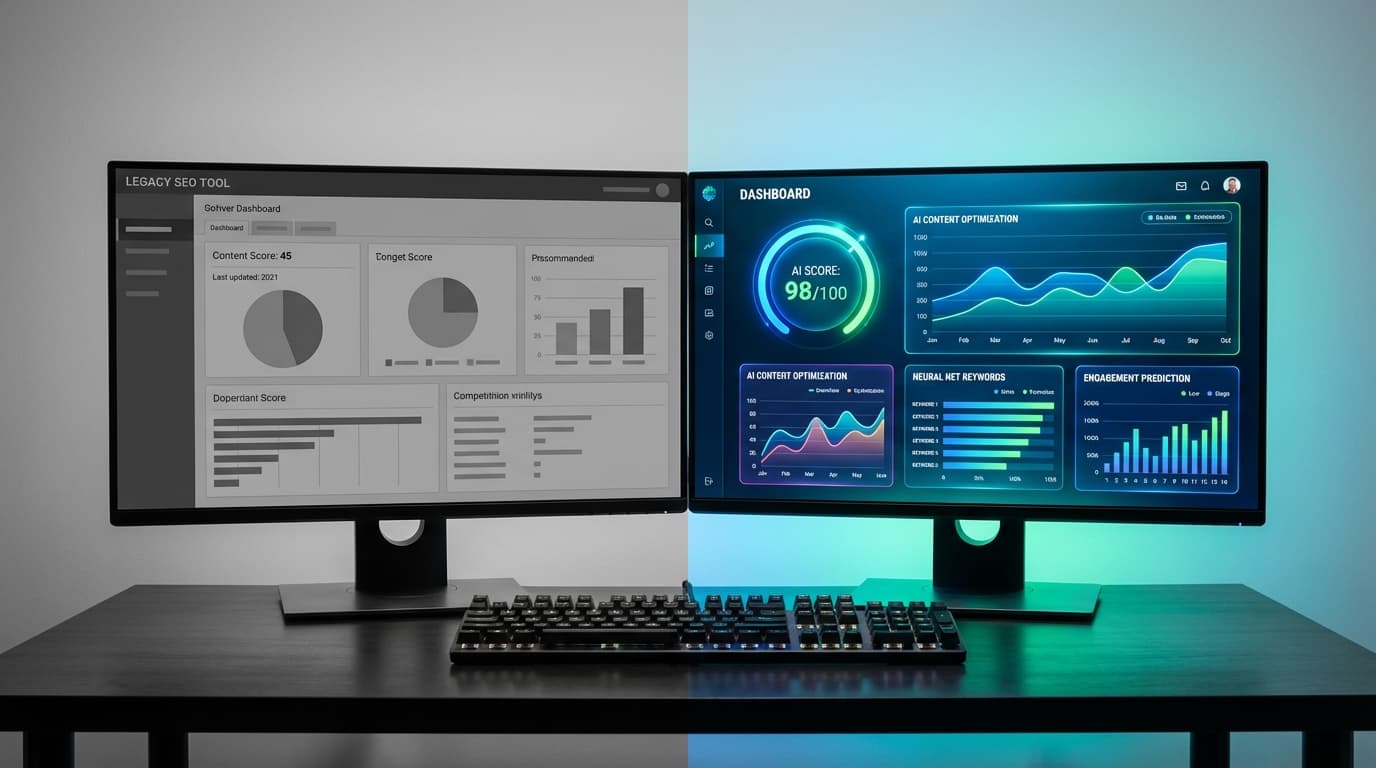
Surfer SEO is a solid tool. I'll say that upfront. Its content editor is genuinely useful, and the SERP analyzer gives you data most writers wouldn't find on their own. But solid doesn't mean perfect, and "best for agencies in 2020" doesn't automatically mean "best for your team in 2026."
If you're reading this, you've probably hit one of Surfer's friction points. Maybe the pricing jumped from comfortable to uncomfortable. Maybe you're burning through content credits faster than expected. Maybe you realized that optimizing for Google is only half the game now, and Surfer doesn't help with the other half.
Whatever brought you here, let's do this honestly. No fake "top 10 alternatives" list where every tool gets a participation trophy. Instead, a real comparison of what Surfer does well, where it falls short, and which alternatives actually solve the problems that make people leave.
Why People Look for a Surfer SEO Alternative
After talking to dozens of teams who switched away from Surfer, three reasons come up repeatedly.
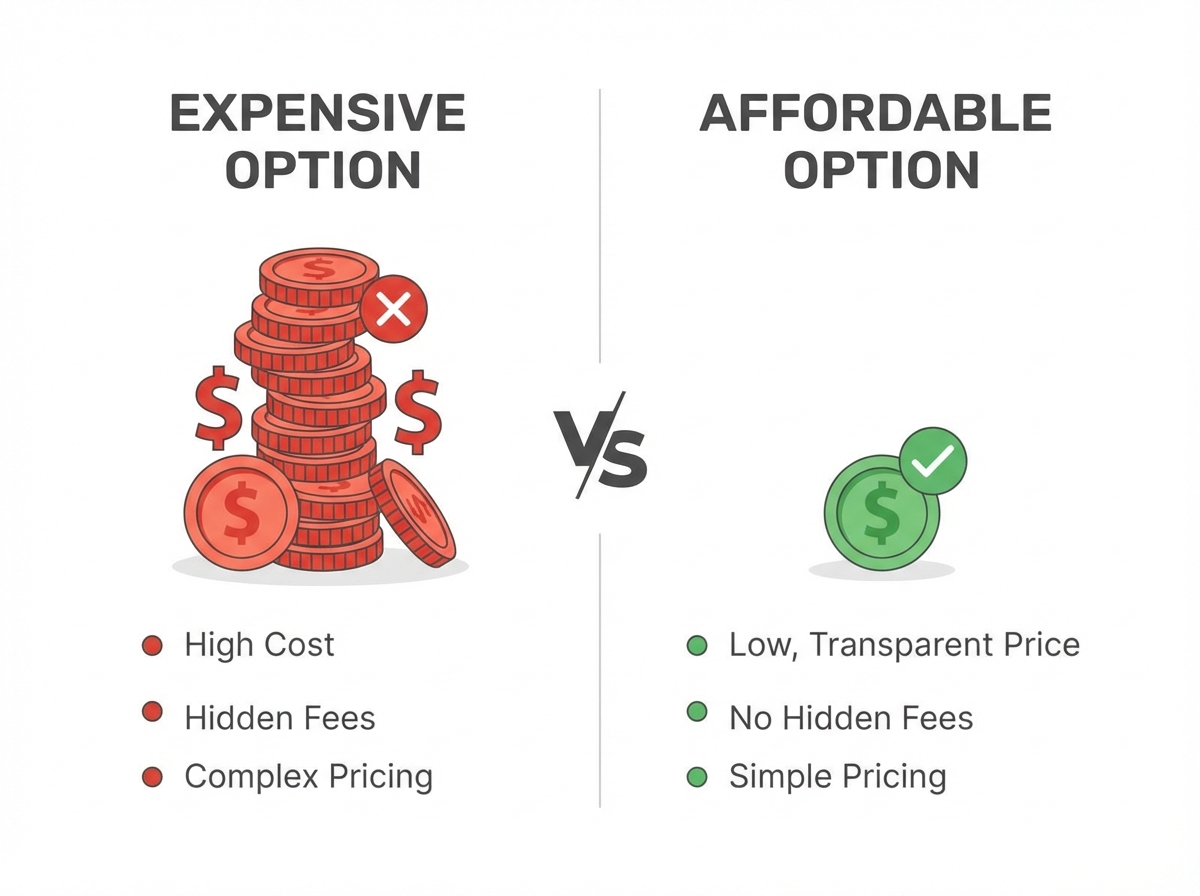
The pricing math stops working. Surfer's Essential plan runs $99/month. The Scale plan is $219/month. Both come with credit limits that reset monthly and don't roll over. If you're a solo creator or a small team publishing 8-10 articles a month, you're paying a premium for capacity you don't use. And if you need more credits, you're buying add-ons on top of an already expensive subscription.
For context, that's $1,188 to $2,628 per year before add-ons. For a content optimization tool. Not a full SEO suite. Not an AI writing platform. Just optimization suggestions. When you stack that against what newer tools offer at a fraction of the price, the value equation gets harder to justify.
Surfer doesn't track AI visibility. This is the big one. In 2026, over 40% of informational queries go to AI assistants instead of Google. Surfer optimizes your content for traditional search rankings. That's it. There's no way to know if ChatGPT, Gemini, or Perplexity are citing your content. No AI visibility metrics. No citation tracking. You're optimizing for half the discovery landscape.
The AI writing features are underwhelming. Multiple reviews note that Surfer's built-in AI tools produce content that needs heavy editing and often ignores the reference materials you provide. At nearly five times the cost of comparable AI writing tools, the AI features don't deliver enough unique value. Most users end up using ChatGPT or Claude separately anyway, which makes the bundled AI a cost you're paying for but not using.
Surfer SEO: What It Does Well
Being fair matters. Surfer has real strengths, and understanding them helps you pick the right alternative.
The Content Editor is excellent. Real-time optimization suggestions while you write. Keyword recommendations, content length targets, heading structure guidance, and a content score that gives you a clear benchmark. For writers who want guardrails while drafting, it's genuinely useful.
SERP analysis is thorough. Surfer breaks down what top-ranking pages have in common: word count, heading structure, keyword usage, image count. This competitive intelligence helps you understand what Google expects for a given query. The data is reliable and regularly updated.
It's established and stable. Surfer has been around since 2017. It integrates with Google Docs, WordPress, and Jasper. The product is mature, documentation is solid, and customer support is responsive. If you value stability over innovation, that counts for something.
Good for agencies at scale. If you're an agency producing 50+ articles per month with a team of writers who need consistent guardrails, Surfer's workflow makes sense at the Scale or Enterprise tier. The per-article credit model aligns with high-volume production.
Where Surfer SEO Falls Short in 2026
The content optimization space has moved fast, and Surfer hasn't kept up in several important areas.
No AI visibility tracking. This is Surfer's biggest gap. In a world where ChatGPT and Gemini influence millions of buying decisions daily, Surfer gives you zero insight into whether AI assistants mention your brand. You can have a perfect Surfer content score and still be invisible to 40% of your potential audience.
Credit-based pricing creates waste. Unused credits expire monthly. You're essentially renting optimization capacity, and any capacity you don't use disappears. For teams with variable content schedules (which is most teams), this means you're regularly paying for credits you never touch.
Limited keyword research. Surfer's keyword tool lacks CPC data, historical volume trends, and advanced filtering. You'll still need Ahrefs or Semrush for serious keyword research, which means Surfer is an add-on to your existing tool stack, not a replacement.
Content quality concerns. A recurring complaint in user reviews: chasing a high Surfer content score can lead to keyword-stuffed, over-optimized content that reads poorly. The tool encourages hitting numerical targets, which sometimes conflicts with writing naturally and compellingly. Some SEOs have reported Google update impacts on content that was heavily optimized using Surfer's suggestions.
Not a complete SEO solution. No backlink analysis. No technical SEO audits. No site crawling. No rank tracking (without add-on). Surfer focuses narrowly on content optimization, which means most teams run it alongside one or two other paid SEO tools.
The Best Surfer SEO Alternative: Gondla
Here's where I'll be direct. Gondla solves the specific problems that drive people away from Surfer, and it does it at a price point that makes the comparison almost unfair.
BYOK Pricing: $15/Month vs $99+/Month
Gondla uses a Bring Your Own Key (BYOK) model. You connect your own API keys from OpenAI, Anthropic, or Google, and pay for actual AI usage directly. The platform itself costs roughly $15/month. Your total spend including API costs? Typically $20-30/month for the same volume of content that would cost $99-219/month on Surfer.
That's not a marginal saving. That's 80-90% less for comparable (and in many ways superior) functionality. No credit limits. No expiring credits. No paying for capacity you don't use. You pay for what you actually consume.
AI Visibility Tracking with Citation Radar
This is the feature Surfer simply doesn't have. Gondla's Citation Radar monitors whether your brand appears in responses from ChatGPT, Gemini, Perplexity, Claude, and other AI assistants. You see citation frequency, sentiment, positioning, and competitive comparisons.
Instead of optimizing content for Google alone and hoping AI assistants pick it up, you get actual data on your AI visibility. Which articles are getting cited? Which competitors are beating you? Which queries trigger your brand mention? This is the information you need to optimize for the full discovery landscape, not just half of it.
15+ AI Models, Your Choice
Surfer locks you into its bundled AI. Gondla lets you choose from 15+ models including Claude, GPT, and Gemini. Different models have different strengths. Some are better at long-form content. Others excel at technical writing or creative copy. Having the choice means better output for every use case.
Content Optimization + AI Visibility in One Platform
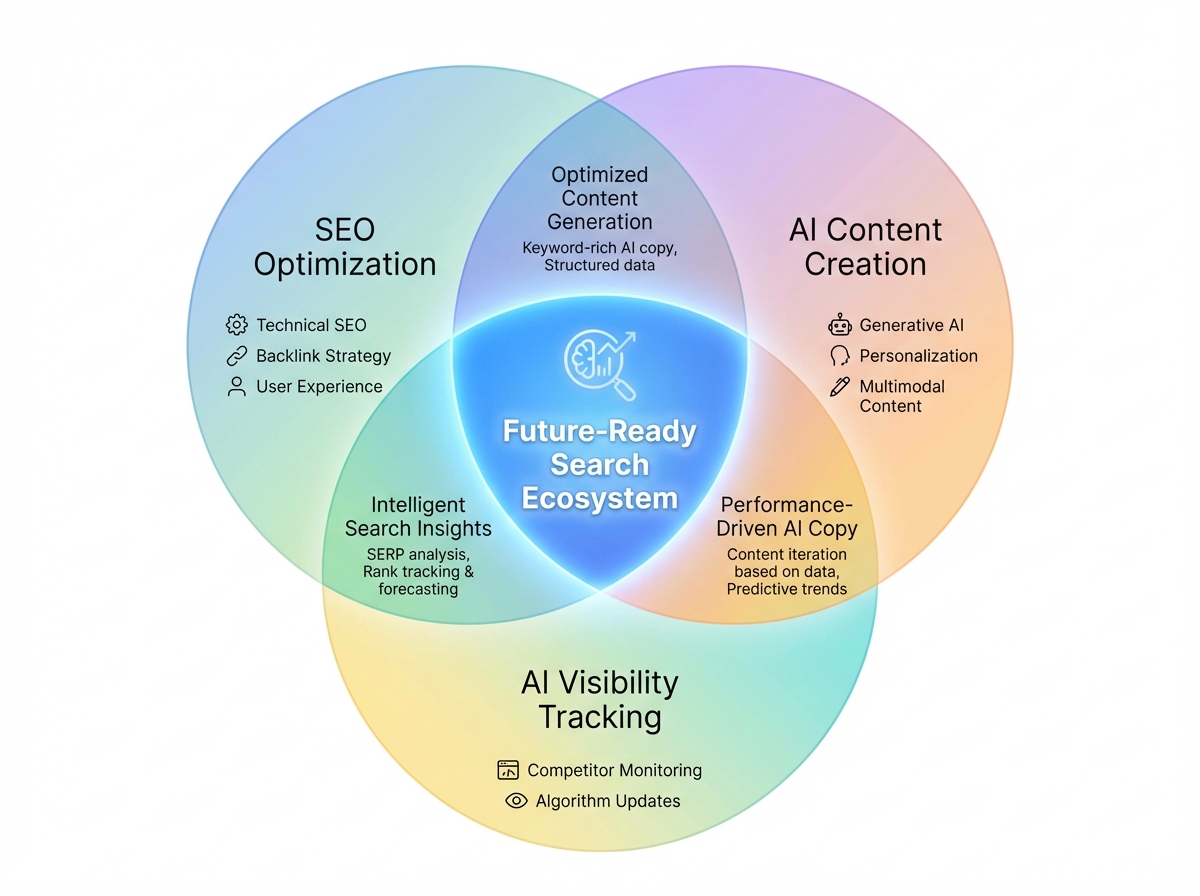
Most Surfer users run multiple tools: Surfer for optimization, Ahrefs for keywords, maybe a separate AI writing tool, and nothing for AI visibility. Gondla combines content optimization, AI-powered writing, and AI visibility tracking in a single platform. Fewer subscriptions, less context-switching, and a unified workflow.
Feature Comparison: Surfer SEO vs Gondla
| Feature | Surfer SEO | Gondla |
|---|---|---|
| Content optimization | Yes (content editor + scoring) | Yes |
| AI content writing | Basic (limited, needs heavy editing) | Advanced (15+ models, BYOK) |
| AI visibility tracking | No | Yes (Citation Radar) |
| Keyword research | Basic (no CPC, no trends) | Yes |
| SERP analysis | Yes (strong) | Yes |
| Backlink analysis | No | No |
| Technical SEO audits | No | No |
| Google + AI dual optimization | Google only | Google + AI assistants |
| Pricing model | Per-seat + credits ($99-219/mo) | BYOK (~$15-30/mo) |
| Credit limits | Yes (monthly, expire) | No |
| API model choice | Surfer's bundled AI only | 15+ models (your keys) |
| WordPress integration | Yes | Yes |
| Google Docs integration | Yes | Coming soon |
Other Surfer SEO Alternatives Worth Considering
Gondla isn't the only option. Depending on your priorities, these tools solve specific Surfer pain points:
Frase ($45/month) is strong on content briefs and research. If your main frustration with Surfer is the content planning workflow, Frase offers a more streamlined research-to-writing pipeline. It doesn't have AI visibility tracking, but the content optimization is solid for the price.
NeuronWriter (~$19/month) is the budget pick. If pricing is your only issue with Surfer and you just need on-page NLP optimization, NeuronWriter does the core job at a fraction of the cost. It's lean and focused, with no extras to pay for.
Clearscope ($170/month) sits at the premium end. Better UI than Surfer, excellent content grading, and strong readability scoring. But it's more expensive than Surfer, so it only makes sense if you're moving up market, not down on price.
MarketMuse ($600+/month) is the enterprise option for teams focused on topical authority and content strategy. Massive feature set, massive price. Only relevant for large content operations with substantial budgets.
Each of these tools addresses one or two of Surfer's limitations. Gondla is the only one that addresses all three major complaints (pricing, AI visibility, AI writing quality) simultaneously.
Who Should Stay on Surfer
I'll be honest. Surfer still makes sense for some teams.
If you're an agency producing 50+ articles per month and your writers already know the Surfer workflow, switching costs are real. Retraining a team of ten writers takes time. If Surfer's Scale or Enterprise plan fits your budget and you don't need AI visibility tracking yet, staying put is reasonable.
If your content strategy is 100% focused on Google rankings and you have no interest in AI assistant visibility, Surfer does that specific job well. The content editor and SERP analyzer are proven tools for traditional SEO optimization.
If you need the specific integrations Surfer offers (WordPress plugin, Google Docs add-on, Jasper integration) and your workflow depends on them, check that your alternative supports the same integrations before switching.
Who Should Switch
If any of these describe you, it's time to look seriously at alternatives.
You're paying for credits you don't use. If you regularly have credits expiring at month-end, you're wasting money. A BYOK model only charges you for what you actually consume.
You need AI visibility data. If your competitors are showing up in ChatGPT recommendations and you're not, you need tracking and optimization tools that cover AI assistants. Surfer can't help you here.
You're a small team or solo creator. At $99-219/month just for content optimization, Surfer's pricing is designed for agencies. If you're publishing 5-15 articles a month, a tool like Gondla at $15-30/month gives you better value and more capabilities.
You want everything in one platform. If you're tired of juggling Surfer plus Ahrefs plus a separate AI writing tool plus manual AI visibility checks, consolidating into a single platform saves time, money, and mental overhead.
How to Switch (Without Losing Momentum)
Transitioning away from Surfer doesn't mean starting over. Here's a practical migration path:
- Export your content audits. Download any Surfer content scores, keyword lists, and optimization reports you want to reference.
- Sign up for your alternative. Get Gondla set up, connect your API keys, and run your first few content optimizations to get comfortable with the workflow.
- Migrate gradually. Start using the new tool for new content while maintaining Surfer for existing projects. Once you're confident in the new workflow, let your Surfer subscription lapse.
- Set up AI visibility tracking. Configure Citation Radar to monitor your target queries across AI assistants. This gives you a baseline for a channel Surfer never measured.
Most teams complete the transition in two to four weeks with zero disruption to their publishing schedule.
Frequently Asked Questions
Is Surfer SEO worth it in 2026?
Surfer remains a capable content optimization tool, but its value depends on your situation. For agencies producing high volumes of Google-focused content, it's still useful. For smaller teams, solo creators, or anyone who needs AI visibility tracking, there are better options at lower price points. The credit-based pricing model and lack of AI assistant features are the main reasons teams are looking elsewhere.
What's the cheapest Surfer SEO alternative?
NeuronWriter starts at roughly $19/month for basic NLP content optimization. Gondla's BYOK model typically costs $15-30/month total (platform plus API usage), which makes it the best value when you factor in AI writing, content optimization, and AI visibility tracking together.
Can I use Gondla and Surfer together?
Yes, some teams use both during a transition period. You could use Surfer's content editor for optimization suggestions while using Gondla for AI writing and AI visibility tracking. Long-term, most users find that Gondla covers both needs and drop Surfer to consolidate their tool stack.
Does Surfer SEO help with AI search visibility?
No. Surfer optimizes content for traditional Google search rankings only. It doesn't track whether AI assistants like ChatGPT or Gemini cite your content. For AI visibility tracking and optimization, you need a tool like Gondla with Citation Radar.
How is Gondla's BYOK pricing different from Surfer's credits?
Surfer charges a flat monthly fee ($99-219) that includes a fixed number of content credits. Unused credits expire monthly. Gondla's BYOK model charges a low platform fee (~$15/month) and you pay your AI provider (OpenAI, Anthropic, Google) directly for actual usage. No fixed credits, no expiration, and typically 80-90% less total cost.
Created with Gondla - The Surfer SEO alternative with BYOK pricing and AI visibility tracking.